Transform Any Venue: The Essential Guide to Portable Dance Floor Hire

Picture this: you’ve found the perfect venue for your wedding or event—a stunning barn conversion, elegant marquee, or picturesque garden space. The ambiance is exactly what you envisioned. Then reality hits: the existing floor is uneven flagstone, grass, or carpeting completely unsuitable for dancing. Your dream celebration suddenly faces a significant practical challenge.
This scenario plays out more often than you might think. Many beautiful venues simply weren’t designed with dancing in mind, yet no memorable celebration feels complete without guests enjoying themselves on the dance floor. The solution isn’t compromising on your venue choice—it’s bringing the dance floor to you. Professional dancefloor hire services transform challenging spaces into smooth, safe, elegant dancing surfaces that seamlessly integrate with your event design. Understanding what’s available, how to choose the right option, and what to expect from installation can ensure your celebration keeps guests dancing all night long.
Why Portable Dance Floors Matter
A proper dance floor does far more than provide a place to dance—it fundamentally shapes your event’s energy and guest experience.
Safety and Comfort
Dancing on uneven, slippery, or unsuitable surfaces creates genuine safety hazards. Grass becomes slippery when wet, stone flooring offers no cushioning for energetic movement, and carpet prevents the smooth gliding essential for many dance styles. Professional dance floors provide stable, level surfaces with appropriate friction—enough grip to prevent slipping but smooth enough for comfortable movement.
This matters particularly for guests wearing formal footwear. High heels and dress shoes perform very differently on grass or gravel compared to purpose-designed dance surfaces. Protecting your guests from twisted ankles or uncomfortable dancing experiences should be a planning priority, not an afterthought.
Creating Visual Impact
A well-chosen dance floor becomes a focal point that defines your event space. It creates a clear, inviting area that draws guests onto the floor and signals where the celebration happens. The right surface, finish, and size can dramatically enhance your overall event aesthetic—whether you’re after classic elegance, modern sophistication, or themed creativity.
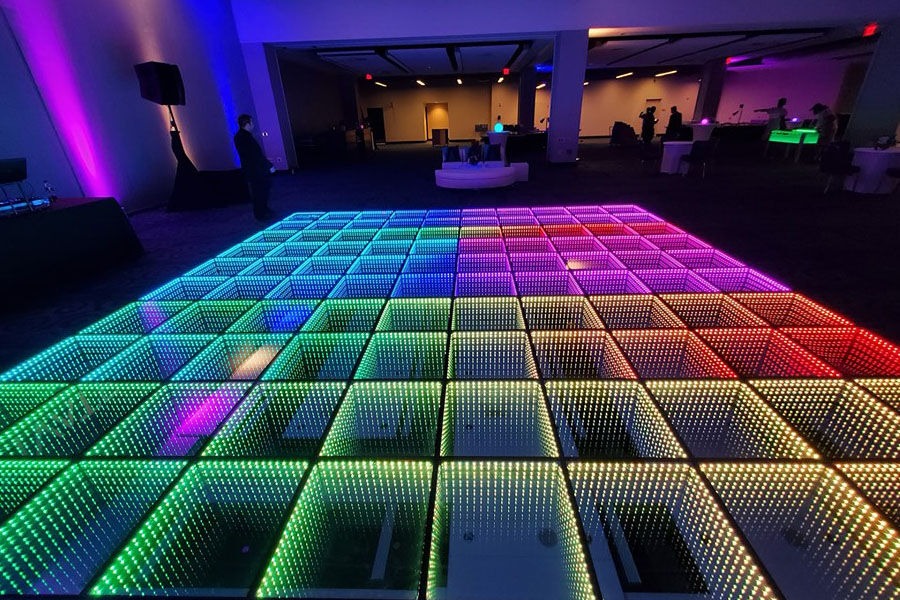
LED-lit options in particular create stunning visual effects that transform as evening progresses, providing Instagram-worthy moments while encouraging guests to participate in the dancing.
Types of Portable Dance Floors
Understanding the available options helps you select the perfect surface for your specific venue and event style.
Traditional Wooden Dance Floors
Classic parquet or plain wooden panels offer timeless elegance suited to formal weddings and sophisticated events. These interlocking sections create seamless surfaces that work beautifully in marquees, barns, and indoor spaces with unsuitable existing flooring.
Wooden floors provide excellent stability and the right amount of spring for comfortable dancing. They’re particularly popular for events featuring live bands or traditional dancing where authentic ambiance matters.
White and Black Gloss Floors
High-gloss finishes in pure white or dramatic black create striking modern aesthetics. White dance floors photograph beautifully and create bright, airy atmospheres—perfect for contemporary weddings and daytime celebrations. Black gloss offers sophisticated drama ideal for evening events and corporate functions.
Both finishes reflect lighting effects spectacularly, amplifying the impact of your venue lighting design.
LED and Illuminated Dance Floors
For truly memorable visual impact, LED dance floors feature programmable lighting that changes colors, patterns, and effects throughout your event. These show-stopping surfaces respond to music, create dynamic atmospheres, and provide entertainment value beyond simple dancing space.
While more expensive than traditional options, LED floors deliver unmatched “wow factor” that keeps guests engaged and creates extraordinary photo opportunities.
Checkerboard and Patterned Floors
Classic black-and-white checkerboard patterns evoke vintage glamour and work wonderfully for themed events, retro celebrations, or couples wanting distinctive visual character. Custom patterns and designs are also available for brands wanting corporate identity integration or couples seeking personalized touches.
Choosing the Right Size and Style
Getting size and style right ensures your dance floor serves its purpose without overwhelming your space or disappointing guests.
Size Considerations
A common rule suggests allocating 2-3 square feet of dance floor per guest, though this varies based on your crowd and event style. For 100 guests, a 12×12 or 15×15 foot floor typically works well. Larger gatherings, events with live bands, or celebrations where dancing is the primary entertainment warrant more generous sizing.
Consider your venue’s proportions—a dance floor shouldn’t dominate the entire space, but it also shouldn’t feel cramped or discourage group dancing. Your hire provider can offer sizing recommendations based on your guest count and venue dimensions.
Matching Your Event Theme
Your dance floor should complement rather than clash with your overall design scheme. Traditional venues suit classic wooden or white floors. Modern spaces work beautifully with gloss finishes or LED options. Garden marquees often benefit from white or natural wood tones that blend with outdoor surroundings.
For themed events, consider how dance floor choice reinforces your concept—vintage celebrations might feature checkerboard patterns, while minimalist contemporary weddings often opt for plain white gloss.
Installation and Logistics
Understanding the practical aspects of dance floor installation helps avoid last-minute surprises.
Setup Requirements
Professional installers typically need 1-2 hours for standard dance floor installation, depending on size and complexity. They’ll require clear access to the installation area and, for outdoor setups, level ground or appropriate base preparation.
Most providers handle delivery, installation, and collection as part of their service. Confirm timing expectations with your venue and ensure installation doesn’t conflict with other setup activities like catering preparation or decoration arrangement.
Ground Preparation
Indoor installations on concrete, tile, or existing wooden floors are straightforward. Outdoor or uneven surfaces may require additional preparation—leveling systems, protective underlays, or temporary flooring bases to create stable foundations.
Discuss your specific venue conditions with providers during booking. Reputable companies will visit beforehand or request detailed information about ground surfaces to ensure appropriate preparation.
Weather Considerations
For outdoor events, have contingency plans for weather. While many dance floors can handle light moisture, heavy rain can create hazardous conditions. Marquees or covered structures protect both guests and flooring. Some providers offer weather-resistant options specifically designed for outdoor use.
FAQ Section
How far in advance should I book a dance floor?
For peak wedding season (May through September), book 6-9 months in advance to secure preferred styles and sizes. Off-peak periods offer more flexibility, though 3-4 months advance booking is still recommended. Last-minute bookings sometimes work but risk limited availability and potentially higher prices.
Can dance floors be installed on grass or uneven ground?
Yes, professional installers use leveling systems and base structures to create stable surfaces over grass, gravel, or slightly uneven ground. However, extremely uneven terrain may require additional preparation or base flooring, potentially increasing costs. Always provide accurate venue information when requesting quotes.
Are there weight or capacity limits for portable dance floors?
Professional-grade dance floors are engineered to support dozens of people dancing simultaneously—easily handling normal event use. Weight capacity varies by system, but reputable providers ensure their floors meet safety standards for intended use. Discuss any concerns about particularly large gatherings or specific requirements with your provider.
What happens if the dance floor gets damaged during my event?
Reputable hire companies include normal wear and tear in their pricing. Accidental damage from reasonable event use is typically covered. However, you’re generally responsible for damage beyond normal use—like cigarette burns, significant spillage stains, or structural damage from misuse. Review terms and conditions, and consider event insurance for additional protection.
Can I customize the dance floor with monograms or designs?
Many providers offer customization options including vinyl decals with monograms, names, dates, or custom designs applied to dance floor surfaces. LED floors often feature programmable displays showing names, patterns, or messages. Custom options typically require advance notice and additional fees, so discuss possibilities early in your planning process.
Conclusion
A portable dance floor transforms venues from challenging spaces into celebration-ready environments where guests can dance comfortably and safely throughout your event. Whether you’re working with a rustic barn, elegant marquee, or outdoor garden setting, the right dance floor creates that essential focal point where memories are made and celebrations truly come alive. By understanding available options, choosing appropriate sizes and styles for your event, and working with professional providers who handle installation logistics, you ensure this crucial element receives the attention it deserves. Don’t let unsuitable existing flooring compromise your perfect venue—bring the dance floor to your dream location and create the celebration atmosphere you’ve envisioned.